"CLICK" on next button or Line Drawing to view the Paintings


|
"CLICK" on next button or Line Drawing to view the Paintings |
| |
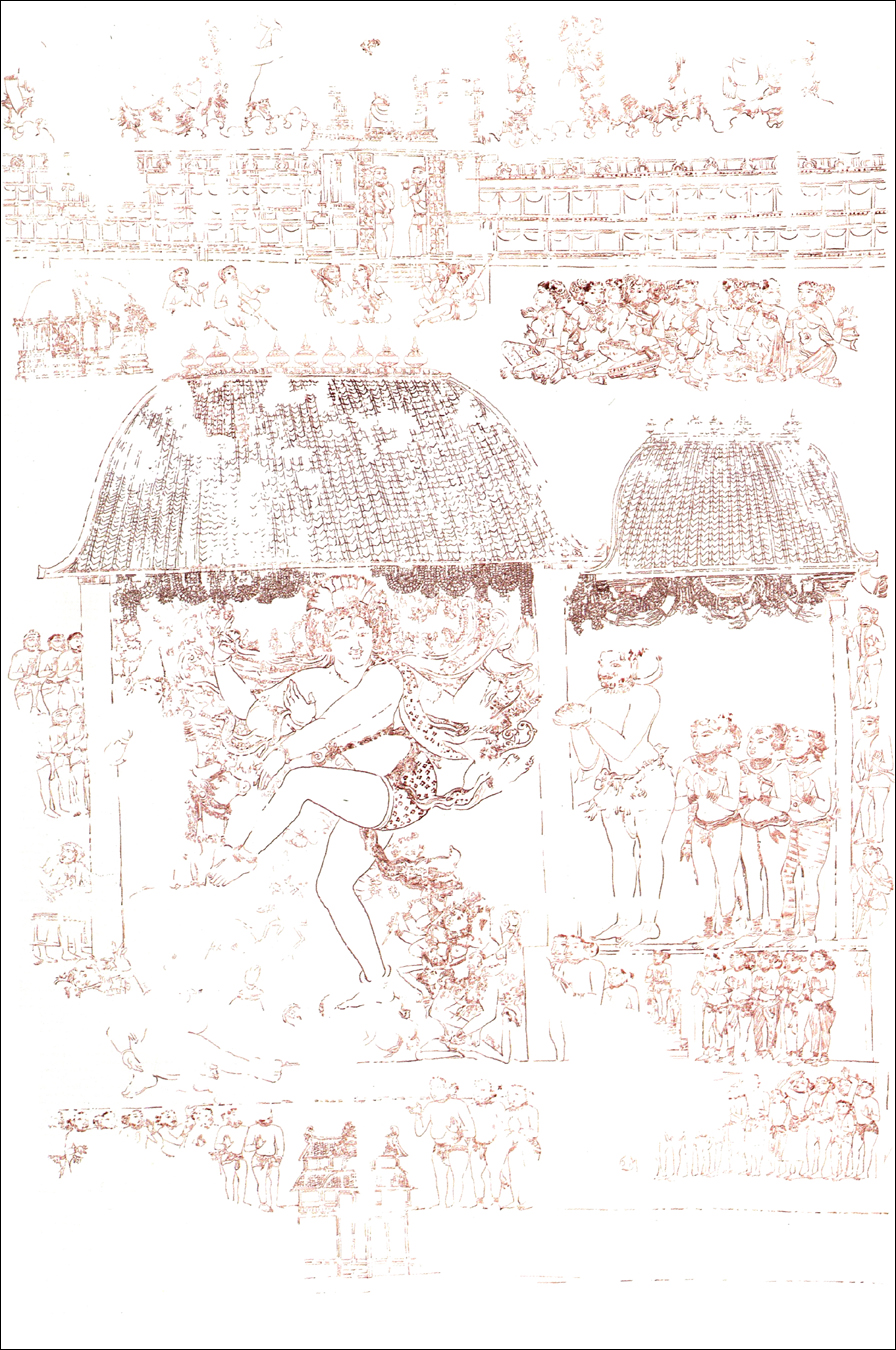
In the Perambalam, a large Naṭarāja is portrayed, endowed with four arms, holding a ḍamaru in the right hand and fire in the left. The right leg is planted on a dwarf while the left, is lifted up and thrown across the body. This figure of Naṭarāja dominates the scene.
On one side of the Naṭarāja figure is a figure in green, portraying Goddess Kālī, dancing in Catura tāṇḍava. To the other side is painted, the figure of Śivakāmi. Except for the headgear, most parts of this image is now lost, but enough remains to identify the figure.
In front of the Chirrambalam stands Rājarāja and his three queens; their hands, folded in anjali. Below this, figures of two men and a number of women are shown. The two structures are cordoned off by guards; keeping the public at a distance from the King and his retinue.
In the adjoining panel are figures of two men standing; one with a beard and the other without. Scholars have identified them as Rājarāja and his guru Karuvūr Dēvar; however, today, this has been disregarded.
It is remarkable that the image of Naṭarāja in the Chidambaram temple retains the same form as the one seen in this painting, indicating the continuity of tradition for over one thousand years.