


National conference on cultural heritage and traditional knowledge base of the indigenous communities of north-east India
The north eastern region of India is home for rich cultures, nature-friendly traditional technologies and enduring social institutions. These have been shaped and nurtured by many tribal and non-tribal social formations inhabiting different parts of the region. Among the indigenous communities, there are more than 120 Scheduled Tribes, most of whom are traditional inhabitants of the hill regions, which make up over 70 per cent of the total area. Despite impressive social and economic changes, the indigenous communities, tribal and others, still retain a great deal of the pristine elements of their age-old life-styles. Nearly every indigenous community can be considered as a repository of a distinctive body of knowledge, cultural traditions, social institutions and technologies, which have evolved over a long period of time. Wisdom and knowledge embedded in the sociocultural life of the folk people of this region is often astounding.
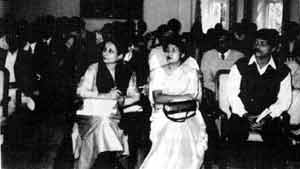
To explore and acquire a proper understanding of all these aspects, the Field Station of North East India of the Indira Gandhi National Centre for the Arts organized a two-day National Conference on Cultural Heritage and Traditional Knowledge Base of the Indigenous communities of North East India at Guwahati on 9-10 December 2002. The venue of the conference was Srimanta Sankaradeva Kalakshetra, an important cultural complex of the north eastern region located in Guwahati. A large number of scholars, social activists and elders, most of them belonging to the tribal and other indigenous communities of the north-east, attended the conference.
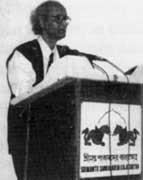
The objective of the conference was to highlight the distinctive elements of regional cultures and institutions and the role played by indigenous beliefs and practices in maintaining order and harmony between man and nature in different settings. Another objective was to identify the time-tested tradition, customary practices and technologies which were not merely eco-friendly and economic, but also relevant for sustainable development of the people and the region. In five thematic academic sessions, the conference covered 27 papers. The inaugural session, presided over by Prof. N.R. Shetty, Member Secretary, IGNCA, set the tone and brought into focus issues to be deliberated in the academic sessions. In his inaugural address, the Chief Guest Dr. G.N. Talukdar, Vice Chancellor, Gauhati University, spoke about the distinctive identity of the north eastern region in the cultural map of India.
He pointed out how indigenous knowledge has been used by various local communities of the region for their survival since time immemorial and stressed the need for retrieving some of the positive lessons to stall the process of man and nature becoming opposing entities. Dr. Birendranath Datta, noted folklorist and president-elect of Asom Sahitya Sabha, in his keynote address as the Guest of Honour outlined how traditional knowledge i.e. knowledge accumulated through generations and stored in myths, legends, tales, proverbs, songs, dances, beliefs, rituals, ceremonies, arts and crafts and handed down from generation to generation determined and enriched the course of life among the indigenous communities in the hills and plains of the north east. He lamented the tendency among many so-called modernists to dismiss traditional knowledge as useless. Prof. A.C. Bhagabati, Hony. Coordinator of the IGNCA Field Station for North East India, while welcoming the distinguished guests and participants outlined the manner in which the idea of the conference took shape, with positive support and encouragement of Prof. N.R. Shetty and other scholars of the IGNCA. In his introductory remarks, Prof. R.K. Bhattacharya, heading Janapada Sampada, IGNCA expressed concern about the rich cultural heritage of the tribal and other indigenous people getting eroded and lost forever, mainly through factors and forces of exogenous change.
Prof. N.R. Shetty, outlined the reasons for relocation of the Field Station from Manipur to Guwahati two years ago. He thanked the Gauhati University authorities for providing space and facilities in the Department of Anthropology for the Field Station Linkages with several Universities had begun the process of going more and more out of Delhi. He referred to the National Manuscript Mission for which IGNCA has been designated the nodal agency and said we can become a nodal agency for many such initiatives. He hoped that the conference would throw up new ideas for future activities.
The first academic session Folk Beliefs, Religion, Cultural Heritage, World view, with Dr. Birendranath Datta in the Chair, took up six papers for presentation and discussion. Desmond Kharmawphlang presented a lucid exposition of the concept of sacred forests in Khasi and Jaintia Hills and how the preservation of these forests were ensured though the belief in tutelary deities in the form of tigers. Nita Mathur outlined the role and impact of Christianity among the Angami Nagas while Easterine Iralu showed how difficult it was to talk separately of traditional Naga religion and culture because the two were so deeply integrated. The continuity of traditional religious beliefs and practices among the Boro tribesman of the Plains and Karbi tribesmen of the Hills of Assam were highlighted in the papers of Kabita Boro, Rani Haxarika and phukan Phangcho. A.N.M. Irshad Ali, in his paper traced the manner in which incorporation of local, folk traditions created a distinctive world view among the rural Assamese Muslims.
The second academic session Ethnography of Food, chaired by dr. M.S. Prabhakara, had five papers covering aspects of Food processing in rural Assam (Mini Bhattacharyya), Food of Lisu women of Arunachal Pradesh (Yusihay Yobin), traditional culture of Food preservation in Manipur (Rangitabali Waikhom), Food preservation and upkeep of household goods among the Rabha tribesmen of Assam (Upen Rabha Hakacham) and traditional uses of wild plants in Assamese folk life (Prabin Saikia). The session provided a unique opportunity for cross-cultural comparison and an insight into the reliance of the indigenous communities on the rich resources of their respective habitats.
The five papers presented in the third academic session Man and Nature on 10th December, conducted by M. Taher in the chair, took a close look at man-nature interface in different habitats. Anwaruddin Choudhury in his paper on wildlife and tribal culture pointed out that though birds, mammals and reptiles formed an important part of the dietary of various communities, certain species were never killed. Hoolack Gibbon, India’s only ape, for instance, are still plentiful in certain hill tribal habitats because of the myth of kinship between the ape and man. Temsula Ao’s was a case study of traditional eco-management practices involving judicious use of water resources and forest wealth in her own village in Nagaland. Caroline Marak, herself a Garo of Meghalaya, outlined Garo perception of environment and use of natural resources in which myths, legends and folk tales ensured conservation. The two papers relating to two neighbouring tribes (Apatani and Yishi) of Arunachal Pradesh by Takhe Kani and M.C. Behera, respectively, brought out the relevance of indigenous knowledge systems in environmental management and natural resource utilization. The traditional agro forestry management skills of the Appertains-both for conservation of forest species in their restricted valley habitat in the hills and intensive irrigated rice-farming – and the resource use pattern of the shifting-cultivating Knishes have the potential for integration to market economy, sustainable-development and maintenance of socio-cultural stability.
Four papers were presented in the fourth academic session Traditional Knowledge, chaired by Tabu Taid. In a joint paper, Dipali Deka and G.C. Sarmah presented a case study of medicinal plants traditionally used for treatment of bone fractures in the rural areas of western Assam. Anil Boro’s paper discussed the unique indigenous skill of the Boro Kacharis (a tribe of the Assam Plains) of constructing irrigation canals, called dong, and earthwork embankments in the rice fields through community effort. S.K. Roy and Rajashree discussed how the inability to appreciate the cultural ethos of the people by governmental agencies led to the failure of programmes for economic change and development. In his paper, Nabin Sarma highlighted the continued importance of a genre of proverbs or maxims, known as Dak Pravacana, in Assamese folk life. The proverbs or pravacananas, attributed to one Dak Purusa (c.sixth century), provide codes of conduct and guidelines for various activities to rural people not only in Assam, but some other parts of eastern India.
The fifth and the last academic session Traditional Institution on 10th December was chaired by A.N.M. Irshad Ali. Four papers were presented in this session. Biloris Lyndem Laso, in her paper on matrilineal and women’s empowerment explored the crucial debate about women’s position in the matrilineal system prevalent in Khasi and Jaintia Hills of Meghalaya. Despite the recognition enjoyed by women in matrilineal society, the traditional customs, unwittingly, deprived the women the right to decision-making outside their homes, she noted R.K. Ranjit Singh, in his paper, delineated the mechanisms for maintaining law and order in the village society through well-knit, village-level political organization among the Monsang, a small tribe inhabiting Chandel district of Manipur. Disintegration of the institution of haori (collective labour offered on a voluntary basis to a fellow villager in need) in the rural areas of Assam and its impact on the folk society was the subject of Nitual Gogoi’s presentation. The system was essentially a matter of harnessing youth power for community service. Youth activities were also the subject of two other papers presented by Sarit Chaudhury (dormitories in the life of the Wanchos) and S. Meren Longkumer (youth organization among the Ao Naga tribe) in the fifth session, Chaudhury outlined the unique dormitory institution – called pa (male dormitory) and zipsam (female dormitory) among the Wancho tribesmen of Tirap District in Arunachal Pradesh and its role in the preservation of traditional knowledge and folklore genre. Longkumer in his discourse on the youth dormitory organization highlighted the traditional way of training the youth and utilizing their services in the Ao Naga villages society of yesteryear. The male dormitory arju also serve as a training institution where members of different age groups learnt folk tales, dancing, customary laws, the art of warfare, and so on.
The valedictory session, which followed, was chaired by R.K. Bhattacharya with Temsula Ao, S. Meren Longkumer and A.C. Bhagabatai serving as a panel. It was resolved to accept the three papers by Rope Rosian Gowloog (Traditional religious beliefs and practices of the Lepchas), Tamo Mibang (Solung Abang: on expression of Adi tradition) and R.K. Kar (Tribal medicine:field data from some Mising villages) who could not attend the conference. The proceeding would be published after appropriate editing.
Report by Dr. A.C. Bhagabati, Honourary Coordinator, IGNCA Field Station, Guwahati
Italian Delegation in IGNCA
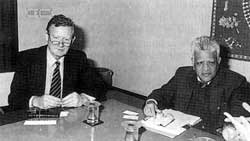
Mr. Alian Elkann, Advisor to Italy’s culture minister was in IGNCA as part of preparatory visit ahead of the minister’s tour to India. Interacting with IGNCA scholars and senior staff members, he said the general Italian public did not have a clear idea about the real India. His government is keen on widening cultural ties with India. According to their perception, India is more important than China. He said historically, India is closer to Italy than any other Asian country. His government was keen on having a long-term exchange programme through which the people of the two nations can interact for fostering better understanding. Member Secretary, Prof. N.R. Shetty, was keen on knowing the technological advancements made in Italy in conservation of art material. He said IGNCA would be eager to coordinate in conservation programmes, especially to get the know-how. He also informed the Italian team about the ambitious National Manuscripts Mission, for which IGNCA is the nodal agency.Mr. Alian Elkann, Advisor to Italy’s culture minister was in IGNCA as part of preparatory visit ahead of the minister’s tour to India. Interacting with IGNCA scholars and senior staff members, he said the general Italian public did not have a clear idea about the real India. His government is keen on widening cultural ties with India. According to their perception, India is more important than China. He said historically, India is closer to Italy than any other Asian country. His government was keen on having a long-term exchange programme through which the people of the two nations can interact for fostering better understanding. Member Secretary, Prof. N.R. Shetty, was keen on knowing the technological advancements made in Italy in conservation of art material. He said IGNCA would be eager to coordinate in conservation programmes, especially to get the know-how. He also informed the Italian team about the ambitious National Manuscripts Mission, for which IGNCA is the nodal agency.
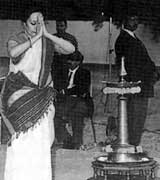
IGNCA’s esteemed trustee, Smt. Sonal Mansingh, has been conferred the honour Padma Vibhushan. A world-renowned dance. Smt. Mansingh is an exponent of Bharat Natyam and Odissi. She has presented innumerable performances all over the world. She has been associated with various cultural institutions and is regarded as one of India’s foremost artist.
Unniarcha
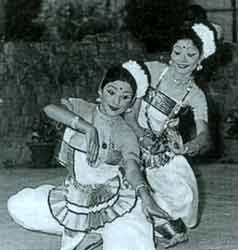
Unniarcha is legendary figure in northern Kerala ballds. She is said to have been a courageous woman, taking on men in weapon fight. Ms. Vijayalakshmi, an exponent of Mohiniattam rendered the story of Unniarcha. Usually in Mohiniattam, the themes of love, romance and friendship are portrayed. Ms. Vijaylakshmi and her team, adopting steps of Kalaripayattu, presented, the veera rasa in Mohiniattam style.
Shri M.V. Kamath is Prasar Bharati Chairman
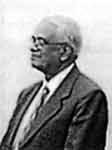
Shri M.V. Kamath, a senior member of IGNCA Trust, has been appointed Chairman of Prasar Bharati. Shri Kamath is known for his fearless writings as a journalist and has been associated with several magazines and newspapers in his career spanning over six decades. He has authored over two dozen books and continues to contribute columns to newspapers.
[ Newsletter | List of Newsletter ]