


Related Links
Kalākalpa – IGNCA Journal of Arts
About
Kalākalpa, the biannual peer-reviewed journal of the Indira Gandhi National Centre for the Arts (IGNCA), has been published since 2003 and is also a UGC-CARE listed journal, seeks a holistic understanding of the arts, not as an activity dissociated from life but as a response to it. It aims to foster active dialogue among scholars across disciplines. The Journal provides a forum for high-quality scholarly articles, research notes, and book reviews covering the following fields: Archaeology, Anthropology, Art History, Linguistics, Literature, Musicology, Dance, Religious Studies, Philosophy, Diaspora, etc. It welcomes original research with new ideas pertinent to an area of specialisation.
ISSN: 2456-8201
Publisher: Indira Gandhi National Centre for the Arts (IGNCA)
Frequency: Biannual, published twice a year on the auspicious occasions of Basant Panchami and Guru Purnima.
Access: Kalākalpa is available in print. You may consult or procure physical copies from the IGNCA Prastuti Corner. Those wishing to obtain a copy may also write to the Editor, enclosing the prescribed price of the journal.
Chief Editor: Dr. Sachchidanand Joshi, Member Secretary, IGNCA
Editor: Dr. Mayank Shekhar, Kalakosa Division, IGNCA
Editorial Board
Prof. Lokesh Chandra
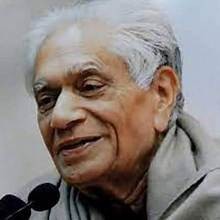 Prof. Lokesh Chandra is a distinguished Indian scholar, Indologist, and authority on Buddhist studies, Sanskrit, and Asia’s cultural and intellectual traditions. His scholarship, marked by extraordinary philological depth and a wide comparative perspective, encompassed Buddhist literature, Sanskrit and Tibetan textual traditions, iconography, and the transmission of Indian knowledge across Asia. He served as the Director of the International Academy of Indian Culture and was closely associated with major scholarly and cultural institutions in India. His extensive body of work, including numerous editions, translations, and studies of Buddhist and Indic texts, contributed significantly to understanding India’s intellectual and cultural influence across Asia. He also played an important role in advancing the study and preservation of India’s manuscript and textual heritage, leaving an enduring legacy in the field of Indian and Asian civilisation.
Dr. Natalia Lidova
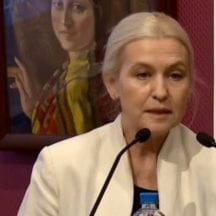 Dr. Natalia Lidova is a distinguished Russian Indologist and Sanskrit scholar, and a Senior Researcher at the Institute of World Literature of the Russian Academy of Sciences. Her scholarship has focused particularly on Sanskrit literature, Hindu culture, ancient Indian theatre, ritual traditions, aesthetics, and the Nāṭyaśāstra. Her seminal monograph Drama and Ritual of Early Hinduism examines the ritual foundations and development of classical Sanskrit theatre, while her extensive research on the Nāṭyaśāstra, rasa, vṛtti, pūjā, and the ritual dimensions of Indian performance traditions has contributed significantly to the academic study of Indian aesthetics and dramaturgy. She has also served as a visiting professor at several Indian universities and has maintained a sustained scholarly association with Indian institutions, including the IGNCA.
Prof. Sadashiv Kumar Dwivedi
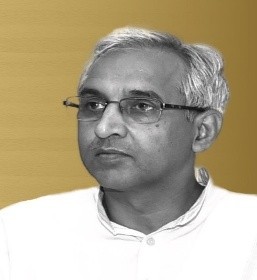 Sadashiv Kumar Dwivedi is a distinguished Sanskrit scholar and Professor in the Department of Sanskrit, Faculty of Arts, Banaras Hindu University (BHU), Varanasi, where he has also served as Head of the Department. His principal areas of scholarship include Sanskrit literature and poetics, literary theory and criticism, Kalidasa studies, and the Indian Knowledge System. He has undertaken significant research on Sanskrit literary traditions, including the Word Index of Kalidasa Literature, and has contributed to critical editions, translations, and studies in Sanskrit poetics. He is also associated with the Kalidasa Sansthan, Varanasi, an institution dedicated to preserving, studying, and publishing Sanskrit poetics and Kalidasa literature. His sustained engagement with Sanskrit literary thought and the Indian knowledge tradition places him among contemporary scholars contributing to the academic study and transmission of India’s classical intellectual heritage.
Prof. Nand Kishore Pandey
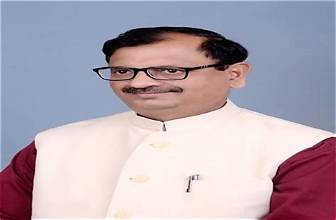 Prof. Nand Kishore Pandey is a distinguished Hindi scholar and academic whose work has significantly contributed to the study of modern Hindi literature, literary criticism, and Indian cultural thought. He has served as a Professor in the Department of Hindi at the University of Rajasthan, Jaipur, and has also held important academic and editorial responsibilities, including serving as Director of the Central Hindi Institute. His scholarship engages with Hindi literary traditions, cultural consciousness, social harmony, and questions of Indian identity. He has also contributed substantially to scholarly publishing and academic discourse, serving as editor-in-chief of several journals and authoring works that examine the relationship between Hindi literature and Indian cultural thought. His sustained engagement with literature, culture, and intellectual traditions reflects a broader concern with understanding the continuity and contemporary relevance of Indian cultural heritage.
Prof. Bhupinder Zutshi
Dr. Balwant Jani
Prof. Makkhan Lal
Dr. Sudhamani Raghunathan
Prof. Nanda Kumar
Chief Editor – Dr. Sachchidanand Joshi
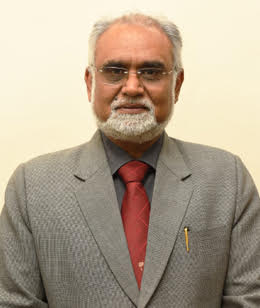 Dr. Sachchidanand Joshi is an eminent scholar, author and institution builder, serving as Member Secretary, IGNCA, and Vice Chancellor, Indian Institute of Heritage.
He has authored and edited numerous works on Indian literature, culture, media and civilisational studies, including Connecting through Culture and Decolonising Indian Anthropology.
He has played a significant role in shaping and advancing India’s cultural policies, manuscript preservation, digital heritage and major national and international cultural initiatives.
Editor – Dr Mayank Shekhar
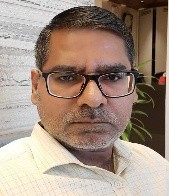 As Editor of Kalākalpa Journal, Dr. Mayank Shekhar oversees the academic evaluation, expert review, editing and selection of research articles for publication, ensuring the journal’s scholarly quality and intellectual rigour. In addition, he serves as Mission Director, National Mission on Cultural Mapping (NMCM), IGNCA.
Review Policy
- All submitted articles are initially screened for plagiarism and their suitability for the scope and editorial standards of the journal. Articles that meet these preliminary requirements are then reviewed by a team/subject experts, in accordance with the journal’s prescribed submission guidelines and review procedures.
- Timeline: Average time from submission to decision is around 4-5 weeks.
Ethics & Policies
- Plagiarism Policy: We use plagiarism detection software (e.g., Turnitin). Similarity Index must be less than 10%.
- AI Policy: Authors must disclose if Artificial Intelligence was used to generate any part of the text.
- Conflict of Interest: A statement requiring authors to declare any competing interests.