


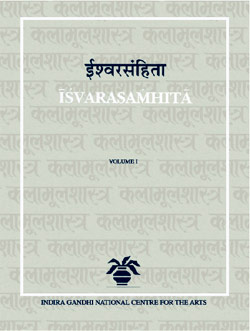
ĪŚVARASAṀHITĀ
KMS series No. 42, 43, 44 , 45 & 46
Edited and Translated by: V. VARADACHARI
2009, 371 pp., abb., Intro., ISBN 978-81-208-3217-6 (Vol.I)
2009, 372-551 pp., ISBN 978-81-208-3218-3(Vol.II)
2009, 552-1087 pp., ISBN 978-81-208-3219-0(Vol.III)
2009, 1098-1491pp., ISBN 978-81-208-3220-6(Vol.IV)
2009, 1492-1887 pp., ISBN 978-81-208-3221-3(Vol.V) Rs.6000 (set of five vols.) (HB)
Vaiṣṇavism has given rise to two very important schools of ritual and philosophy – Vaikhanasa and Pāñcarātra.
Īśvarasaṁhitā is an important text of the Pāñcarātra school of Vaiṣṇavism.
Whereas Vaikhanasa is relatively archaic in character and leans more upon the Vedic tradition for its repertoire of mantras used in religious rites and ceremonies, the Pāñcarātra is more liberal and open in its approach. It has a text tradition going back to some 2,000 years-which has also been the main source of the Viśiṣṭādvaita philosophy of Rāmānuja (eleventh-twelfth century). In most of the Vaiṣṇava temples in south India, especially in Tamil Nadu, worship is conducted in accordance with the prescription of one of the important Pāñcarātra Saṁhitās.
The Īśvarasaṁhitā is an important text of the Pāñcarātra school and is followed meticulously for the conduction of daily Pūjā ceremony and performances of various religious festivals in the Nārāyaṇasvāmī temple of Melkore. It can safely be dated to eighth-ninth century at least on the basis of its reference in the Āgama Prāmāṇya of Śrī Yāmunācārya. It is supposed to be a simpler and smaller version of the older Sāttvata-Saṁhitā of this school which is the earliest available work of Pāñcarātra and is considered as one of three ratnas Uewels), along with Pau kara and Jayā-Saṁhitās. In twenty-five long Adhyāyas the Īśvarasaṁhitā describes in great detail the rites, rituals and ceremonies taking place (or ought to take place) in a Vaiṣṇava temple.
Palm-leaf manuscripts of the Īśvarasaṁhitā were procured mainly from the Nārāyaṇasvāmī Temple of Melkore for the sake of authenticity. We have also appended to the text the gloss of Aḷasiṁha Bhaṭṭa (early nineteenth century) which shall be helpful in comprehending certain difficult or sectarian expressions. The English translation on the opposite (right) page has been provided for the facility of the modern scholars working on philosophy, ritual and iconography oVaiṣṇavavism.
A proper understanding of ritual is obviously indispensable for the study of art.